


_1696593365_big.png "Bistro Style String Temporary Lights 100 ft Pack")
_1696593365.png "Bistro Style String Temporary Lights 100 ft Pack")





Space, power, surface, permits, weather, and timing — in the order they actually matter.
Most outdoor parties in Lynchburg, Forest, Bedford and Roanoke don’t go sideways because someone picked the wrong bounce house. They go sideways because the yard was two feet too narrow, the only outlet was on the far side of the house, the ground sloped more than it looked, or nobody checked whether the park needed a permit until four days out.
This checklist walks the decisions in the order that keeps you out of trouble. Work through it before you pick a single unit and your event rental order will be right the first time. Everything below reflects how deliveries actually run in Central Virginia, including the setup rules published on our rental FAQs.
The four constraints that decide your order
Every outdoor rental decision comes down to four physical limits, and they do not negotiate with you. Space is how much clear, level ground you actually have once you subtract the deck, the fire pit and the dogwood. Power is how many independent circuits you can reach from where the units will sit. Surface is what the equipment gets anchored to. Weather is the plan you either made in advance or improvised at 10 a.m. on a Saturday.
Guest count, budget and theme matter too, but they are choices. These four are facts. Measure them first, then go shopping through the full rental inventory.
Step 1:Measure your space before you fall in love with a unit
The single most common booking mistake is comparing the unit’s dimensions to the yard. Inflatables need a clearance buffer on every side for anchoring, blower placement, safe entry and exit, and a margin so nobody lands against a fence. That buffer is usually larger than people expect.
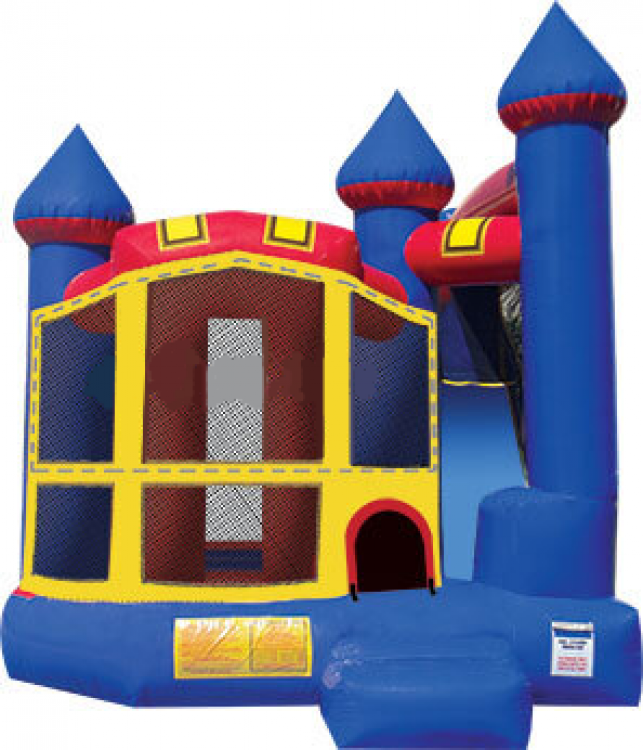
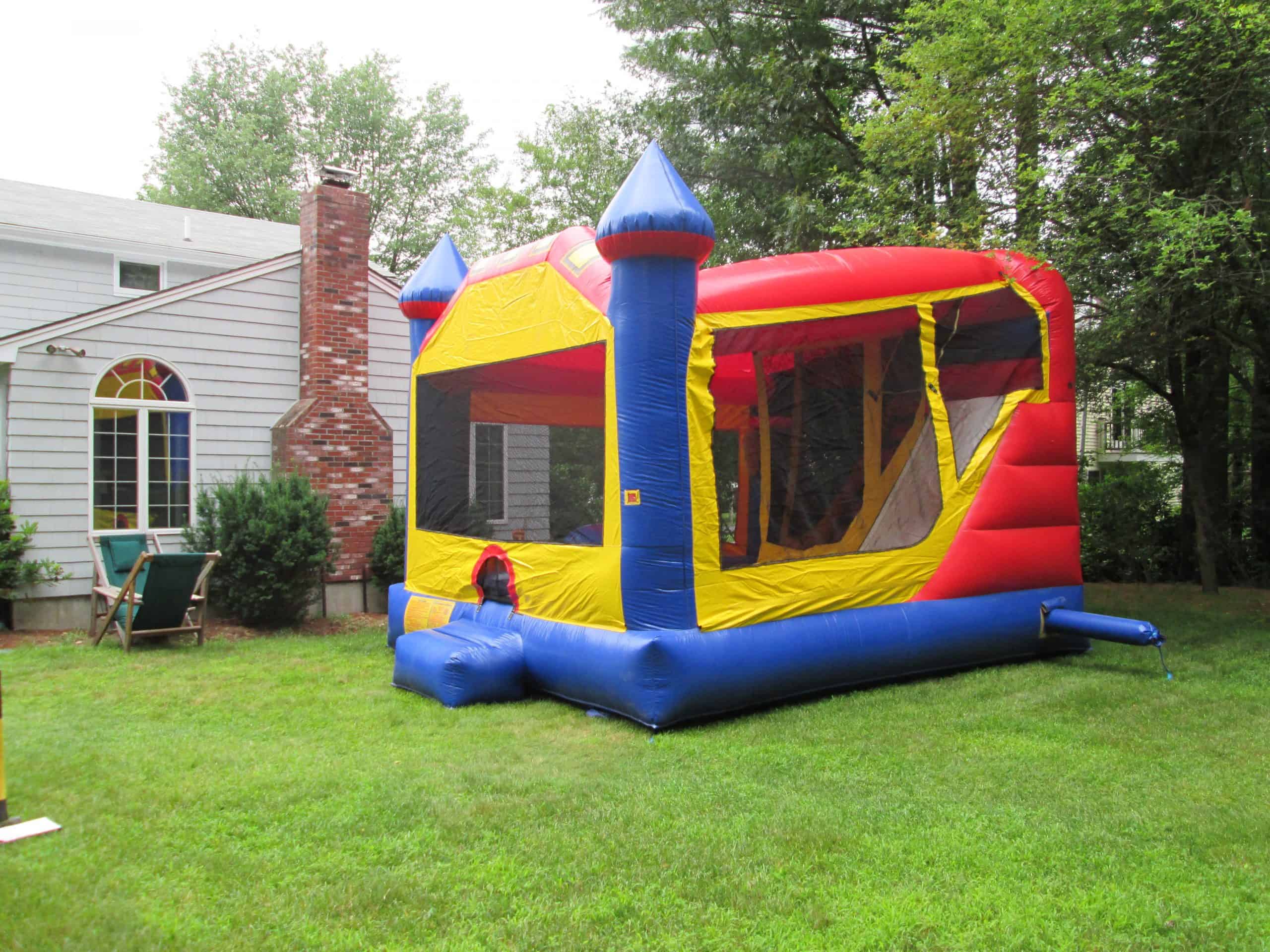
Take the Castle Fun bounce house. The unit itself is 13 ft long by 14 ft wide and 15 ft tall. The space required to set it up is 23 ft by 23 ft with 17 ft of overhead clearance. That is roughly a five-foot cushion on every side and two feet above the unit — and a yard that looks comfortably big enough on paper can fail on the overhead number alone once you account for power lines and low branches.
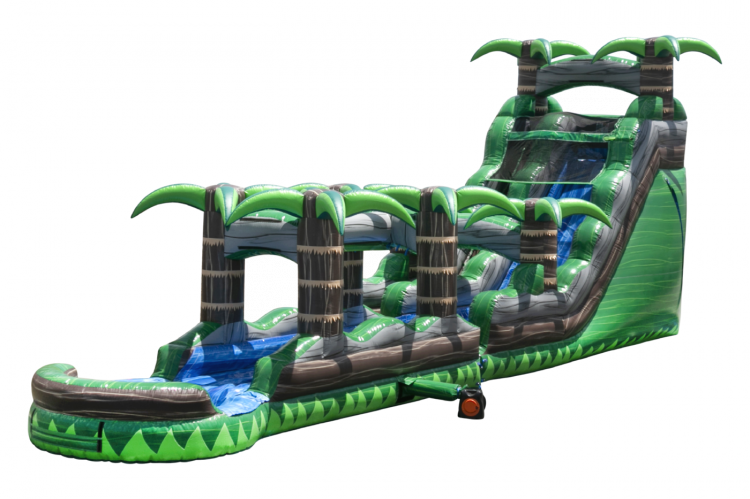
The pattern holds as units get bigger. Our mechanical bull measures 16 ft by 16 ft, but needs a 20 ft by 20 ft footprint with 12 ft of headroom. Longer attractions from the obstacle course lineup can run 65 to 100 feet end to end, which means a standard suburban back yard rarely works they belong on a school field, a church lot or a park green.
How to measure properly
- Measure the clear rectangle, not the total yard. Subtract anything you cannot move: AC units, raised beds, sheds, retaining walls, septic lids.
- Look up. Note the lowest branch, gutter line, power line or carport edge over your chosen spot.
- Check the gate. Every inflatable has to physically get to the spot. A 36-inch side gate stops a lot of deliveries.
- Walk the path from the truck to the setup spot. Stairs, steep grades and soft muddy ground all affect whether a unit can be placed at all.
- Write the numbers down — length, width, overhead, gate width — and have them ready when you book.
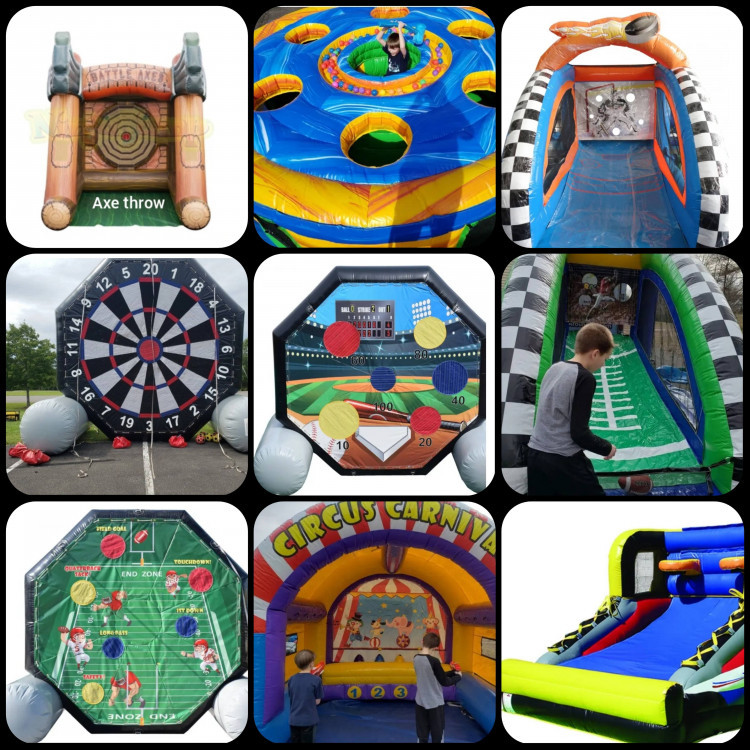
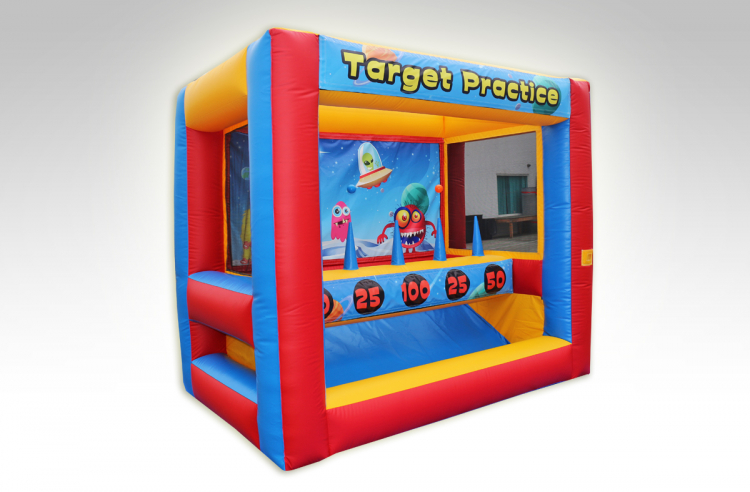
If the buffer math doesn’t work for a full-size unit, smaller footprints from the inflatable games and carnival games categories deliver the same energy in a fraction of the space, and several of them set up on a driveway.
Step 2: Count your circuits, not just your outlets
This is where more events get delayed than any other single item. Each inflatable runs on a continuously powered blower, and each blower needs a dedicated 115V, 20-amp outlet within 50 to 75 feet of the setup area. Critically, each blower must be on a separate circuit two outlets on the same breaker count as one power source, and daisy-chaining them trips the breaker mid-party.
Most residential back yards have one exterior circuit. That means one inflatable. If you want a bounce house and a water slide running at once, you either need to identify a second independent circuit inside the house with a safe cord route, or add power. Only cords supplied with the rental may be used, which rules out running a household extension cord from the garage.
Adding power is straightforward: a 4000-watt event generator covers units the house can’t reach, and it’s the standard fix for park, field and farm venues where there is no building at all. Everything in the event extras category — generators, light posts, coolers and linens — exists because outdoor venues rarely come with infrastructure.
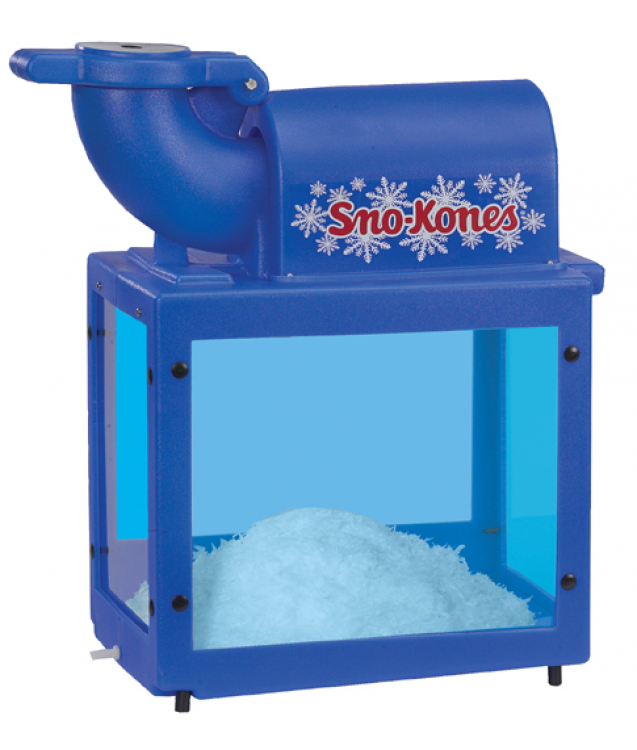
Don’t forget the non-inflatable draws. A cotton candy, popcorn or sno-cone machine pulls real current, and heating elements on a shared circuit with a blower is exactly the combination that kills power to both. Budget concessions have their own outlet.
The power worksheet
- Count the attractions you want running simultaneously. That is your minimum circuit count.
- Find the breaker panel and identify which exterior outlets are on which breakers. Testing takes ten minutes and saves the whole day.
- Measure the distance from each usable outlet to each setup spot. Over 75 feet means you need a generator, not a longer cord.
- Add one circuit for concessions and one for music or lighting.
- Whatever the gap is, cover it with generators booked at the same time as the units.
Step 3: Check your surface and prep it early
Inflatables set up on grass or a flat hard surface such as concrete or asphalt. Slopes and uneven ground are not permitted not as a preference, but because anchoring and rider safety depend on a level base. If your yard has a noticeable grade, identify the flattest usable section now rather than on delivery morning.
Grass gets staked. Hard surfaces get weighted with sandbags, which is why a driveway or parking lot setup is entirely workable but has to be flagged at booking so the crew brings the right anchoring. If you’re putting a tent over a rough or sloping area, event sub-flooring creates the level surface that tables, chairs and a dance floor need.
Two prep rules matter more than they sound:
- Clear the area completely. Debris, rocks, sticks, pet waste and obstacles all have to be gone before the crew arrives. Vinyl tears easily and repairs are billed to the renter.
- Do not mow within 36 hours of delivery. Fresh clippings stick to and stain inflatable vinyl, and wet cut grass makes anchoring less reliable. Mow three days out, not the morning of.
Also mark your utilities. Anchor stakes go into the ground, and irrigation lines, invisible fence wire and shallow utility runs are all at stake depth. Knowing where they are before the crew arrives is the renter’s job.
Step 4: Size the tent to the format, not just the headcount
Tent sizing is the part people guess at, and guessing costs the most because tents are the largest line item. The number you need is not guests it is square feet, and the square feet per guest depend entirely on what those guests are doing.
Industry sizing guidance puts a standing cocktail reception at roughly 8 square feet per guest. Seated dining needs far more: a 60-inch round table with chairs around it occupies about 100 square feet all in. Our round table and 8-chair packs seat eight per round, which works out to roughly 12 to 13 square feet per seated guest. Long 8-foot rectangular tables are slightly more efficient at about 90 square feet per table.
Then add the things that aren’t guests. A buffet line, a bar and a DJ station each need about 100 square feet of their own, and a dance floor wants 2 to 4 square feet per guest you expect to actually dance.
Worked example: 60 guests, seated dinner, dance floor
- 60 seated guests at 8 per round = 8 rounds × 100 sq ft = 800 sq ft
- Buffet + bar + DJ = 300 sq ft
- Dance floor for roughly half the room = ~150 sq ft (a 15×15 floor is 225 sq ft)
- Total needed: ~1,300 sq ft → a 30×50 frame tent at 1,500 sq ft, not the 30×40 you might have guessed
The full range in the tent, table and chair inventory runs from a 10×10 pop-up for a check-in table or shade station up to a 40×80 frame tent for large church, school and corporate events. Run the math before you choose, and remember that a tent also needs clearance around its footprint for staking and guy lines — a 30×50 tent does not fit in a 30×50 space.
One weather note specific to tents: tents are non-refundable and non-cancelable, rain or shine. That is standard across the industry because tent crews block a full install window, but it means a tent is a commitment you make early rather than a hedge you add late.
Step 5: Find out whether you need a permit this is
Virginia-specific
Here is the part almost no party-planning guide covers, and it catches Central Virginia hosts every year.
Under the Virginia Amusement Device Regulations, inflatables are classified as amusement devices when they are open to the public. Regulated devices require a current certificate of inspection valid for one year issued by a local building department or a private inspector holding a valid certificate of competence as an amusement device inspector. Local building officials can charge up to $50 per event for an inflatable device inspection.
A private birthday party in a fenced back yard is a different situation from an event open to the public. The distinction that matters is public access, not headcount. Church festivals, school carnivals, company family days, block parties, fundraisers and anything in a public park generally fall on the regulated side.
What that means city by city
Roanoke. The City of Roanoke runs an amusement device permit process covering inflatables explicitly. Applications must be submitted no less than five days before the event starts, and the packet includes a site plan showing property lines and ride locations, a ride listing, a certificate of liability insurance with a $1,000,000 minimum, the Virginia amusement inspector certification, and the setup instructions or owner’s manual for inflatables. Zoning treats public events with amusement devices as a temporary use capped at 14 calendar days. If you’re planning a public event and browsing party rentals in Roanoke, start the permit conversation the same week you start the rental conversation.
Lynchburg. If your event is in a city park, the shelter itself has to be reserved through Lynchburg Parks & Recreation, and reservations must be completed no later than 10 business days before the date. Small shelters run $80 and large shelters $95, with the Riverside Park gazebo at $80 and the overlook at $150. Shelters are available at Blackwater Creek Athletic Area, Jefferson Park, Miller Park, Peaks View Park and Riverside Park. Renters complete a Facility and Park Use Questionnaire and a Simple Use Permit, and park staff can confirm the current inflatable policy for the specific site — ask that question explicitly, because policies vary by park. For back yard events in town, the Lynchburg event rental page covers what’s available locally without any of this paperwork.
Everywhere else. Across our Central Virginia delivery area — Forest, Bedford, Amherst, Madison Heights, Appomattox, Rustburg, Altavista, Moneta and the surrounding communities — each locality sets its own park and public venue rules. Additional park or public venue fees apply on top of the rental, and permits are the customer’s responsibility unless arranged otherwise. If the paperwork is the part you’d rather not handle, there is a permit paperwork service that puts it on us instead.
Whatever the venue, ask for the certificate of insurance early. Schools, churches, HOAs and municipalities almost always require one naming them as additional insured, and it takes time to issue. Our insurance page covers what we carry and how to request a certificate.
Step 6: Build the weather plan before you need it
Central Virginia summers produce afternoon thunderstorms with very little notice, and the rule is not negotiable: inflatables shut down in sustained winds over 15 mph, or in lightning, thunderstorms or severe weather. That threshold is lower than most people assume — 15 mph is a breezy, ordinary-feeling day, not a storm.
Weather does not qualify for a refund, which is standard for the industry and is exactly why the plan matters. A good weather plan has three parts:
- A dry alternative. A gym, fellowship hall, garage or covered pavilion that can hold the crowd for an hour. Most storms in this region pass in under 45 minutes.
- Non-wind-dependent backup entertainment. This is where carnival games, face painting and concessions earn their keep — they move indoors in five minutes while the inflatables sit idle.
- A decision-maker and a cutoff time. Name one person who calls it, and agree in advance what triggers the call.
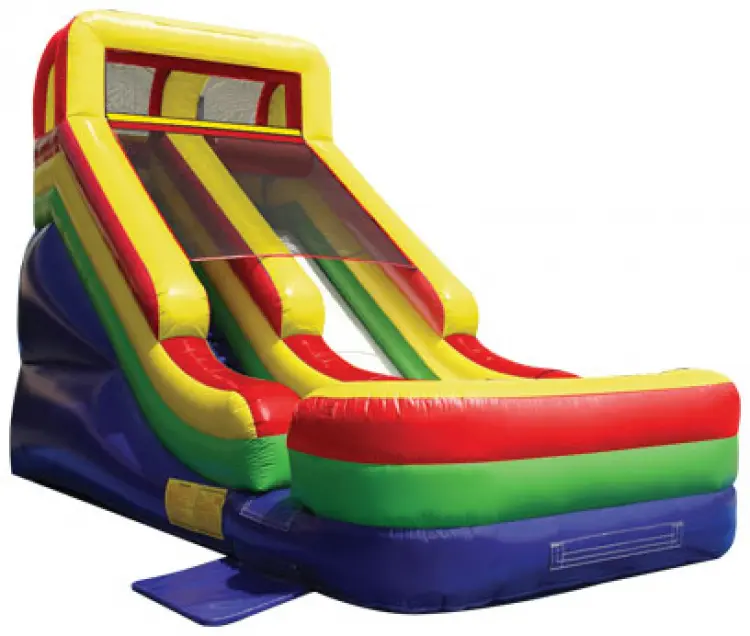
Season matters too. Water units from the water slide and wet combo range want genuine heat, so May through September is the practical window in this region; a 72-degree day in late September means a lot of kids shivering on the sidelines. Outside that window, dry slides and dry combos give you the same structure without the temperature risk, and the fall festival and winter package lineups are built for the shoulder and cold seasons.
Step 7: Lock the timeline and be there for delivery
Rental logistics run on a tighter clock than most hosts expect.
A 30% payment reserves your date and time, and that reservation is what actually holds the equipment. Peak Saturdays in May, June, September and October book out well in advance across the region, so the calendar, not the budget, is usually the binding constraint. All payments are non-refundable, with a one-time transfer available within six months given at least 10 days’ notice before the original date. Changes inside 36 hours may incur a 30% rescheduling fee.
Delivery lands anywhere from 48 hours in advance up to a 2-to-3 hour window before the event, depending on the route and the equipment. Early delivery is normal and usually good news for a morning start.
Someone has to be on site to receive the delivery. If the crew arrives and the site isn’t ready or nobody’s there, the crew departs and attempted-delivery fees apply. If the crew has to wait, waiting is billed at $75 per 15 minutes. Blocking out the delivery window on your own calendar is the cheapest insurance in this entire checklist.
Two more timeline notes worth writing down: only our staff may move or service equipment once it’s placed, so plan the position carefully rather than assuming it can be shifted later; and for overnight rentals, blowers are removed and locked, with the renter taking full responsibility for the equipment until pickup.
Step 8: Decide what needs a trained attendant
Some attractions require supervision as a condition of rental, and others simply run better with it. An adult must supervise all equipment at all times regardless that is the baseline, not the staffed option.
The mechanical bull ships with a trained operator included, because it has ten speed settings, a 48-inch minimum height, a 300-pound weight limit and an on-site rider waiver. The rock climbing wall works the same way. For everything else, an attendant for supervision handles rider rotation and age grouping so the host isn’t refereeing, and for larger multi-attraction events an event manager coordinates the whole floor.
Whether or not you staff it, enforce the rules that prevent both injuries and damage charges. Riders come off in matched size and age groups. Shoes, glasses, belts and anything sharp come off. Silly string, confetti, glitter, food, drinks, foam, tape, candy, face paint and trash stay off the units — this is the list that generates cleaning and repair charges. Pets stay off entirely. And inside tents, open flames, grills, propane equipment, Sterno, candles and heaters are prohibited without written approval, which is worth telling your caterer early.
Build your package by event type
Once the constraints are settled, choosing units gets easy. These combinations work reliably across Central Virginia.
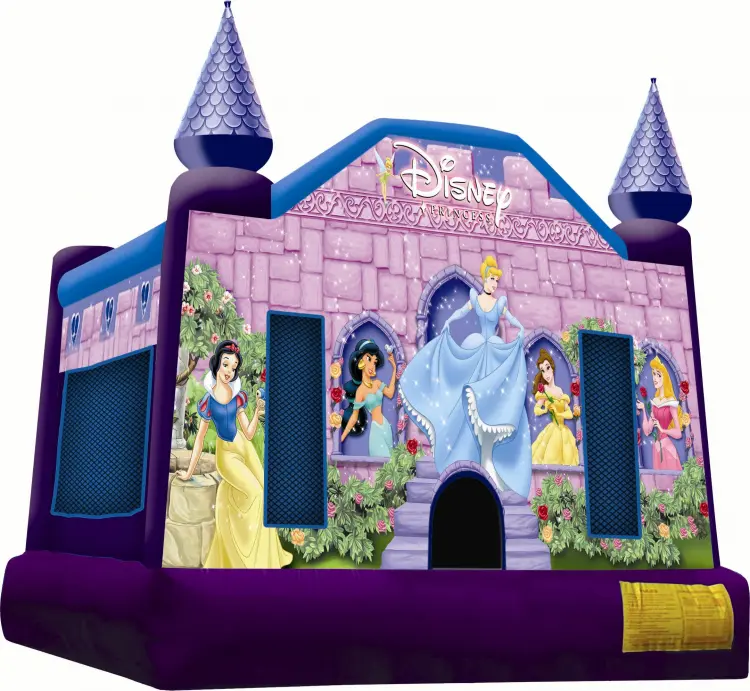
Back yard birthday, ages 3–10. One age-appropriate bounce house from the moonwalk range, plus one concession machine and one lawn game. One circuit, roughly 25 by 25 feet of clear grass. See the birthday party setups for tested combinations.
Summer party, June through August. A wet combo or water slide as the anchor, a shade tent for adults, coolers and seating. Requires hose access, a drainage-tolerant spot and full sun for warmth. Water units dominate the calendar in this window book earlier than you think you need to.
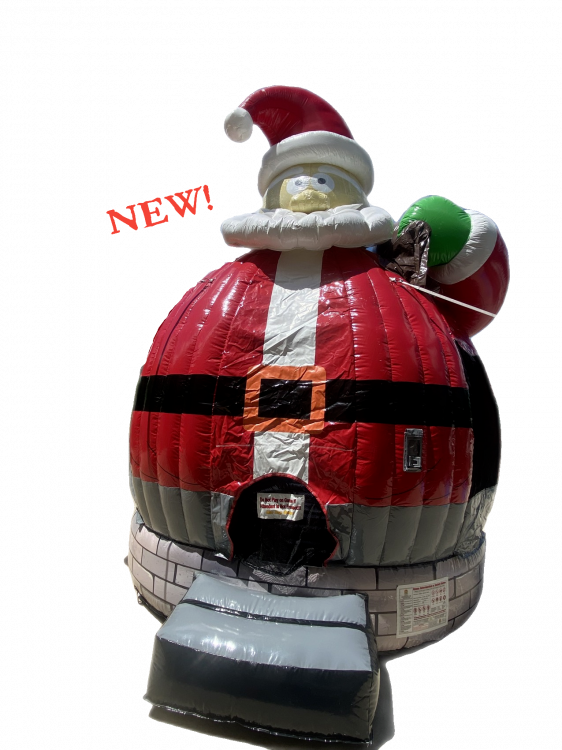
Church or school festival. An obstacle course or two for throughput, three to four carnival games to absorb lines, concessions, tents over the game area, and generators. Add attendants and confirm the permit and insurance requirements early this category is almost always a public event. The school and after-prom lineup and public event packages are built around this profile.
Corporate or company family day. A headline attraction like the mechanical bull or climbing wall, interactive games for adults, tents with tables and linens, and an event manager. See corporate event rentals.
Wedding, reunion or reception. Tent, tables, chairs, linens, dance floor, sub-flooring if the ground is uneven, bistro string lighting, and light-footprint entertainment for kids so the adults get their evening. Tent rentals in Lynchburg covers the sizing options.
The pre-delivery checklist
Print this and walk it the day before.
- Setup area measured: length, width and overhead clearance recorded
- Gate width measured and the delivery path walked
- Circuits identified and tested; one dedicated 20-amp circuit per blower, all within 75 feet
- Generators booked for any gap
- Surface confirmed level; sandbags flagged if setting up on concrete or asphalt
- Area cleared of debris, rocks, sticks, pet waste and obstacles
- Lawn mowed at least 36 hours ago not this morning
- Irrigation, invisible fence and shallow utility lines marked
- Permit secured and shelter reserved if the venue requires it
- Certificate of insurance requested and delivered to the venue
- Delivery window blocked on your calendar with a named person on site
- Weather backup location identified and a decision-maker named
- Rider rules communicated to parents in advance
- Pets secured indoors for the delivery window and the event
Frequently asked questions
How much space do I need for a bounce house?
Plan on roughly five feet of clearance on every side of the unit plus overhead clearance above it. A mid-size bounce house measuring 13 by 14 feet needs about 23 by 23 feet of clear, level ground with 17 feet of overhead clearance. Always check the specific unit’s listed setup dimensions rather than its unit dimensions.
Do I need a permit for a bounce house in Virginia?
Inflatables are regulated as amusement devices under the Virginia Amusement Device Regulations when they are open to the public, and regulated devices require a current one-year certificate of inspection. Private back yard parties are treated differently from public events. Public events in Roanoke require an amusement device permit submitted at least five days in advance, and events in Lynchburg city parks require a shelter reservation completed at least 10 business days ahead. Always confirm with the specific locality and venue.
How many outlets do I need?
One dedicated 115V, 20-amp circuit per inflatable, with the outlet within 50 to 75 feet of the setup area. Two outlets on the same breaker count as one circuit. Concessions and lighting need their own circuits. If you don’t have enough, a 4000-watt event generator covers the gap.
What size tent do I need?
Allow about 8 square feet per guest for a standing reception, and about 100 square feet per 60-inch round table for seated dining. Add roughly 100 square feet each for a buffet, bar and DJ station, and 2 to 4 square feet per guest for a dance floor. Sixty guests at a seated dinner with a dance floor generally needs about 1,300 square feet — a 30×50 frame tent.
Can inflatables be set up on concrete or a driveway?
Yes. Grass and flat hard surfaces such as concrete and asphalt both work. Hard surfaces are anchored with sandbags rather than stakes, so tell us at booking. Slopes and uneven ground are not permitted on any surface.
How far in advance should I book?
A 30% payment reserves the date, and peak Saturdays in May, June, September and October fill early. If your date is fixed, reserve as soon as you know it availability, not budget, is usually what limits the choice.
Ready to build your order?
Work the four constraints first space, power, surface, weather then browse the full catalog with your numbers in hand. If you’d rather talk it through, bring your measurements, your circuit count and your venue and we’ll build the package around them. Current seasonal deals are worth checking before you finalize, and our customer reviews cover how delivery day actually goes.
Monkey Business Event Rentals delivers throughout Central Virginia, including Lynchburg, Forest, Bedford, Amherst, Madison Heights, Appomattox, Rustburg, Altavista, Moneta and Roanoke.